The aim is to find an archive and chose three pieces to research. Find out about these textiles through observation and further research. While looking at local archives, the one nearest to me was difficult to get to and expensive. I also had the added complication of having Covid which stopped me do anything for a few weeks. So, I fell back on the idea of exploring a personal archive. This is a weird concept – finding things that you would put in an archive of your life, though we all do it to some extent with scrapbooks and memory boxes, even photo albums. I chose three items with interesting textiles that have significance to me. I chose my wedding dress, a hand knitted bolero jacket, and an antique rocking chair. I chose them for the mix of manufactured and hand made elements. I know a little bit of their stories but not enough to make researching them easier than it would have been had I had picked from a real archive.
Substance and Story – My Wedding Dress
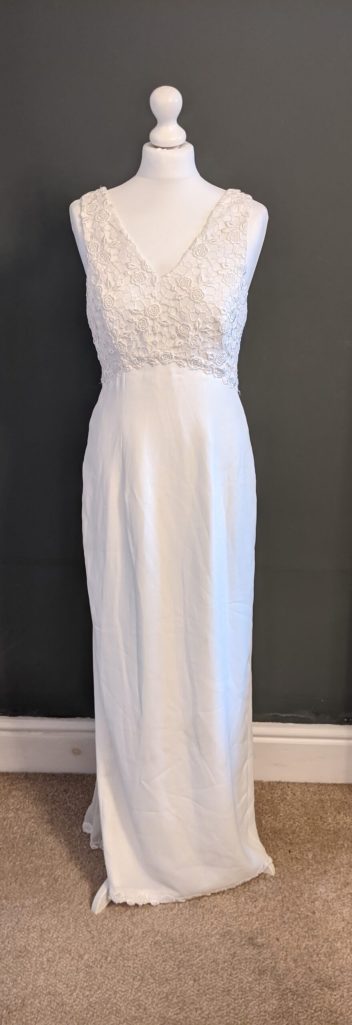

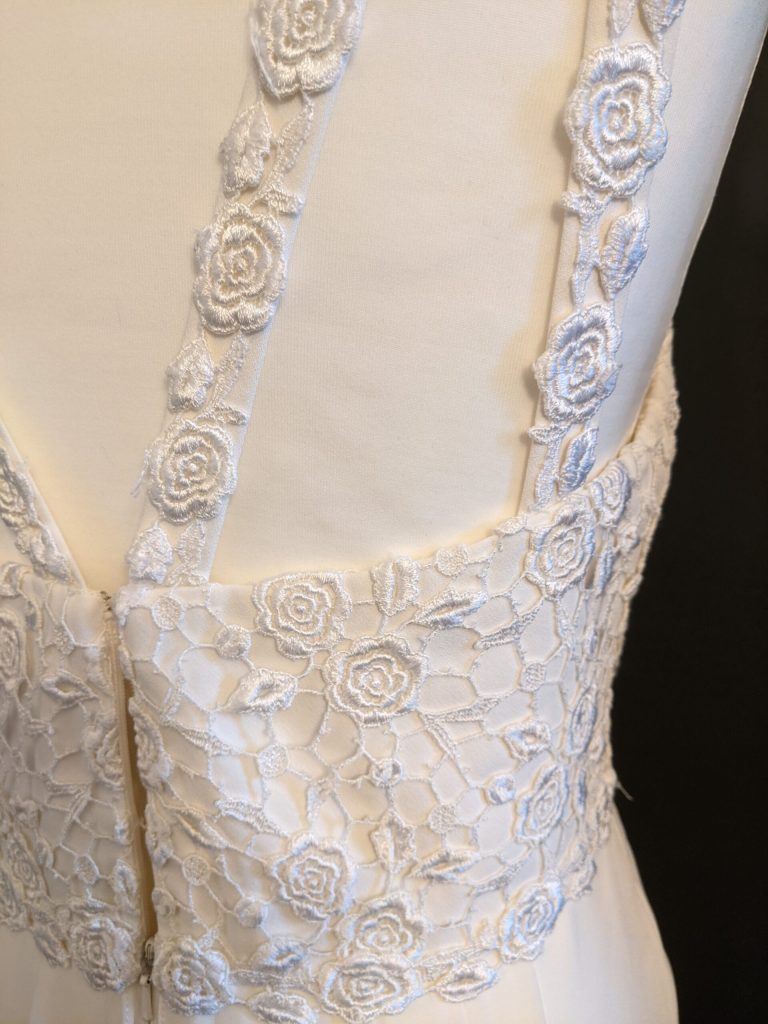
My wedding dress was bought in 2002. I remember it was a dress from the “last season” and so it was half price. It cost me £150 reduced from £300. It was part of the Victoria Jane collection by Ronald Joyce. To be honest until this project I thought Victoria Jane was a person, not the name of a collection. This collection was actually designed by Veni Infantino, who still designs for them. Ronald Joyce is a British label started in the 1950’s. It’s one of their more simple designs. According to the label it’s style number 1078 – this yielded nothing in an internet search! It’s dry clean only and made in China. It is 100% polyester except for the guipere – which I just learned is a type of lace embroidery with no mesh backing. It is most often an open design that is heavy and thick. Not particularly dainty. It also has a split at the back which is covered with a sheer panel.
On the label it says it was made in China but there is no indication as to where the material was manufactured. So, we have no idea who made this and what their working conditions were like. At the time that never crossed my mind, I just felt lucky to get a lovely dress at a cheap price. Nowadays I try to be more conscious of where I get my clothes from. Just because it’s made in China doesn’t mean the conditions were terrible but we can’t be sure and that shouldn’t sit well with people. Looking at the company their website states that they only work with factories that share their ideals, their teams visit several times a year to check on them. Their ideals include no child labour, forced labour, reasonable wage, equal opportunities, and nothing is tested on animals. Was this the case in 2002 though?
Like most wedding dresses it was only worn once. There is very little wear and tear. It does not look brand new though. There are threads pulled along the guipere at the top and the bottom of the dress has got dirty from touching the floor. Despite the appearance of being simple and dainty it is actually very sturdy and heavy. I don’t think you tell from it’s appearance how old it is. It is a simple design which doesn’t date it. It has no yellowing, which would mean it is not very old.
Substance and Story – Hand Knitted Jacket
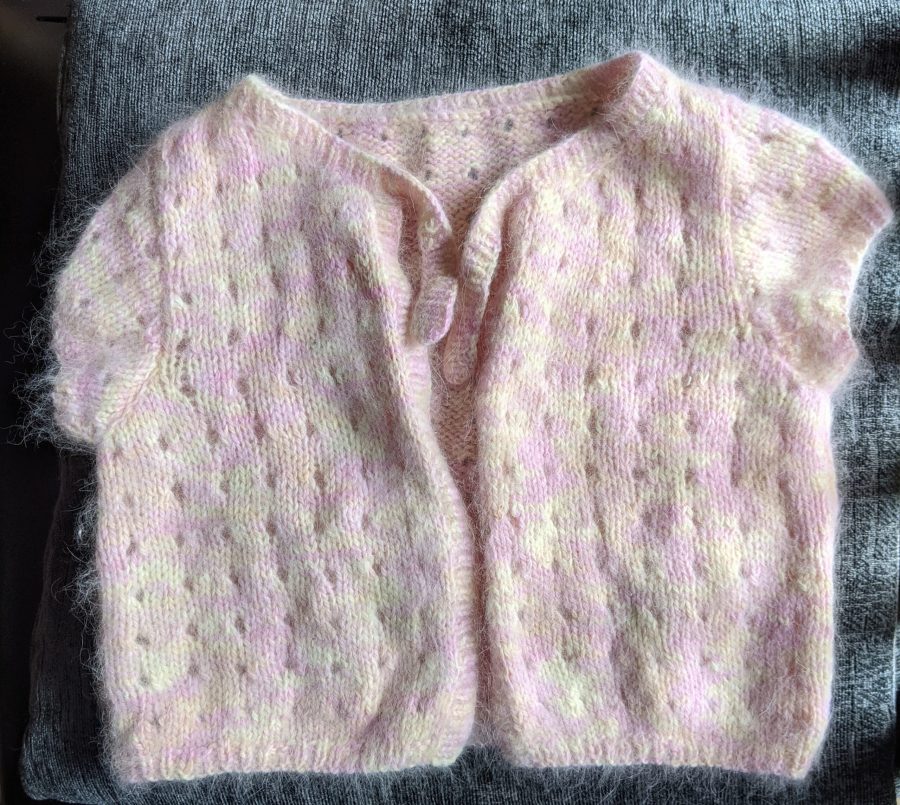


The jacket pictured above was hand knitted by my mother in law for my daughter when she about five in 2008(ish). It’s knitted from a soft, brushed mohair blend of yarn. From memory she bought the yarn and pattern from a local knitting shop called “Yarn”. That is where my knowledge of the material stops.
From internet research I found the yarn itself is a range of wool called “Temptation” and is a blend of 70% acrylic and 30% mohair. Machine washable at 40 degrees (I have washed it a few times) It feels fuzzy/fluffy and it is incredibly soft. There are no embellishments on it at all, just a little tie at the top.
Looking into the wool I learned that Sirdar is a Yorkshire firm established in 1880 but in about 2000 they stopped manufacturing in the UK and outsourced to Turkey. 80% of their wool is made in Turkey. This information is from their website – they don’t say where the the other 20% is manufactured.
Mohair itself is made from the hair of the Angora goat native to parts of India (Jammu and Kashmir) As herds can be found all over the world now it’s impossible to say exactly where the wool is from. Traceability now becomes an issue, especially in the case of animal welfare. If we don’t know where the hair is from then we don’t know the conditions of the goats or the workers. These are issues that have become increasingly a cause for concern in recent years, especially in the fashion industry. It has been highlighted that “fast fashion” comes at a price and some consumers want to know where and how their clothes have been made. A quick internet search bought up the fact that the life expectancy of the Angora goat is ten years but if bred for wool they can be killed much younger if they become “unprofitable”. There is honestly no way of knowing who made this wool and what their working conditions were like.
The personal story of the jacket is that it was intended for short term use. It was made for a five year old who would grow out of it very quickly. While it looks very delicate, it’s actually very sturdy and shows no sign of wear as it was only worn a handful of times. It was considered “a bit fancy” at the time so it was never played in. It hasn’t even lost it’s mohair “fuzziness”. Even if you didn’t know this I think you could guess all that from looking at it. It had been stored away in a memory box and retrieving it obviously bought out a lot of memories. Saving it obviously meant it was special to us in some way. It was handmade for parties and special occasions. I remember how it felt when hugging my daughter as a little kid (teenagers don’t hug quite as much!) and we ended up talking about a lot of parties from her childhood. The memory she had most about it was wearing it for a school play or assembly and she had to play the triangle. Some of these memories are bittersweet. We love watching our kids grow up and seeing the people they become but somedays I’d love to have a day with her little again.
Substance and Story – My Rocking Chair
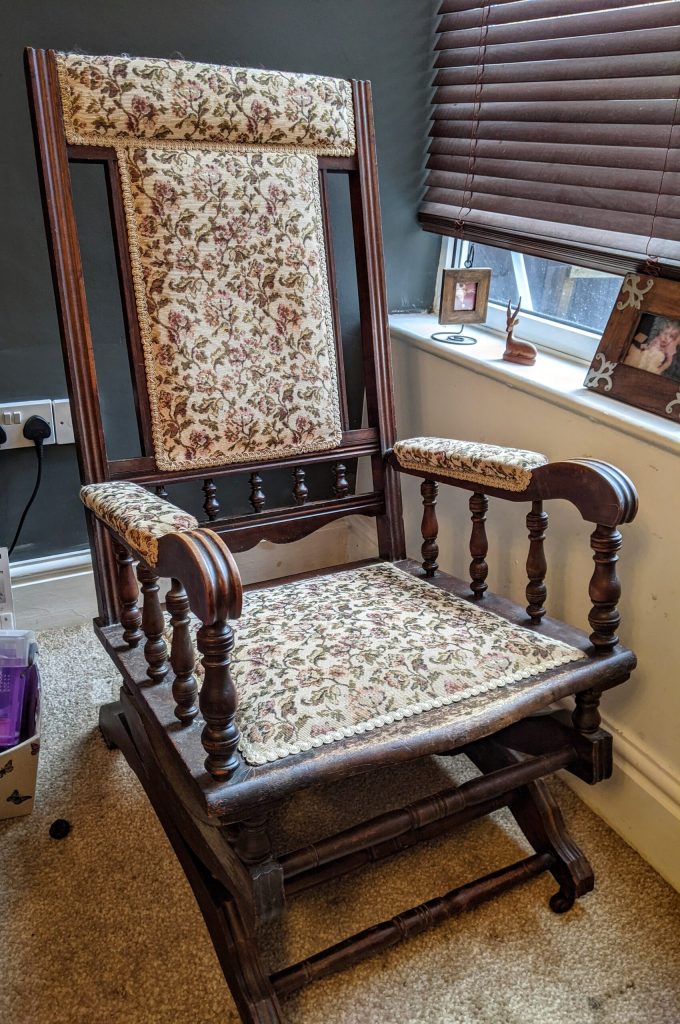
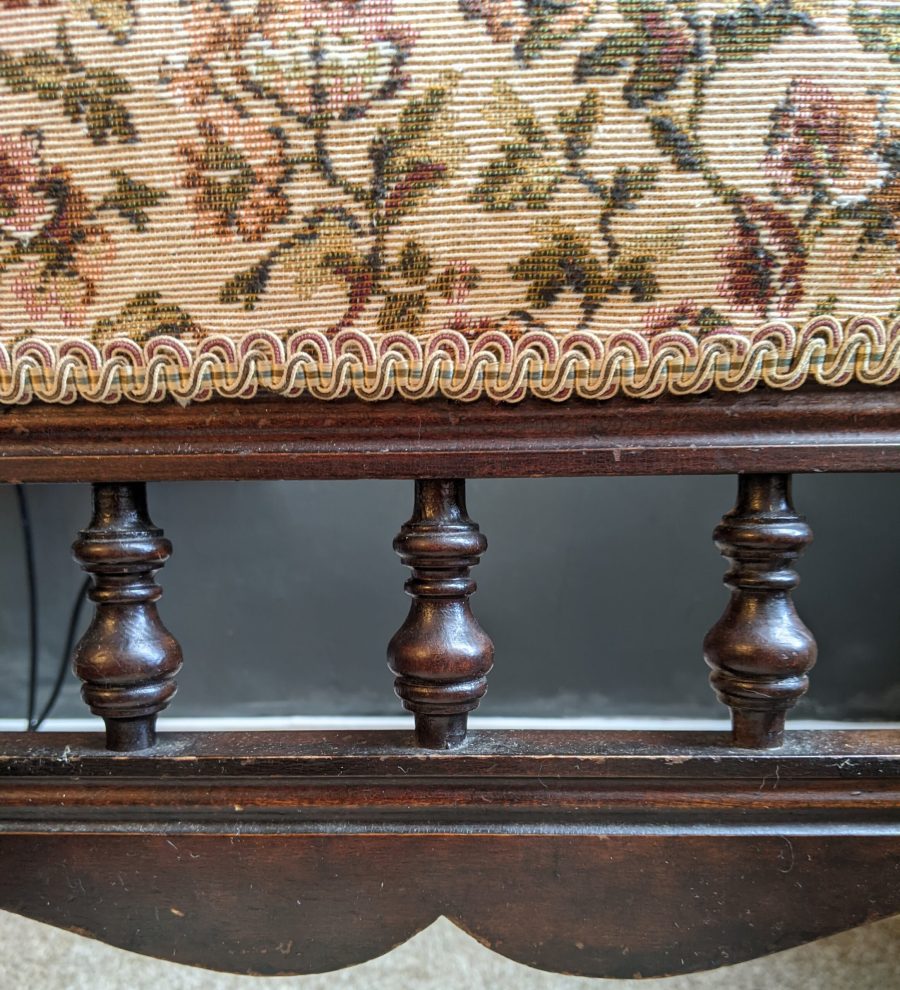
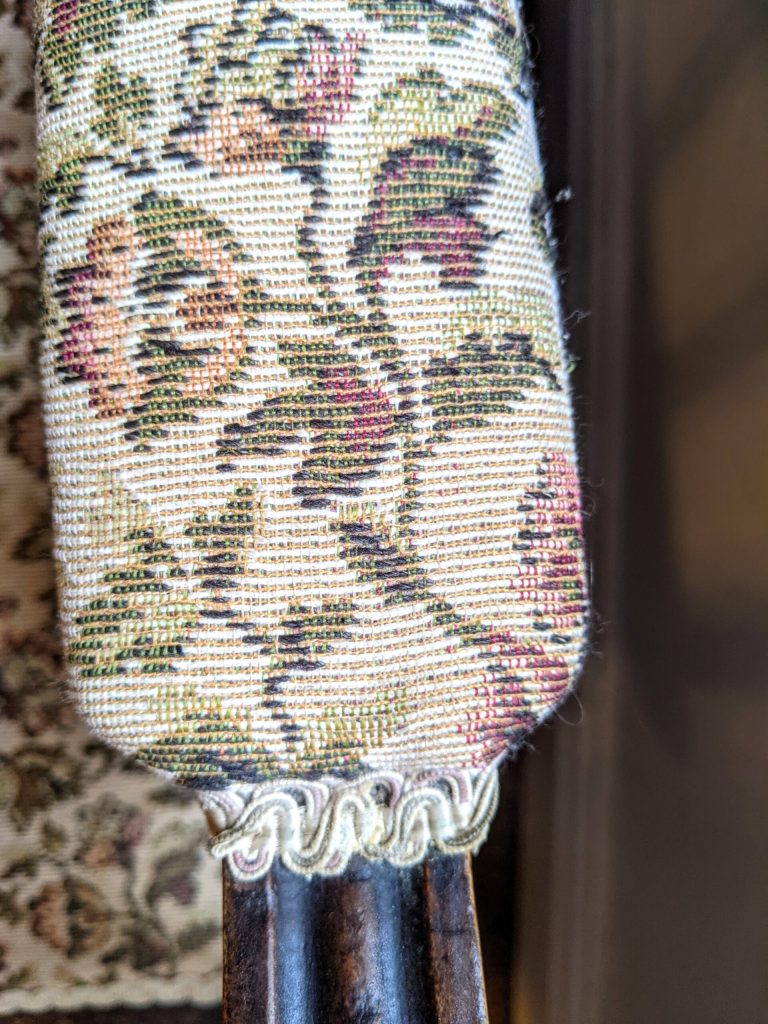
According to The Architizer online the first rocking chair was invented in 1710 by adding ice skates to the bottom of a chair. Although cradles that rock have been around since the middles ages. My rocking chair is hard to date. While there are plenty of books and internet resources around on rocking chairs, none have a really in depth look at their history. Dating it is pretty much an educated guess with a potential date range being 1890 to 1930. The closest match is a chair I found on Etsy with the seller confidently stating the chair was made in the 1920’s, from walnut and a tapestry like material. Chairs are mostly dated from their manufacturers label. Mine does not not have a label. Looking at it you can tell it’s old. Mostly from the rusty springs and the many scuffs and chips on the wood. The material is in really good condition though. It is a machine woven fabric that looks like a tapestry in a French design. I know it’s machine made as most chairs from that time were. I cannot feel any stitching on the design. It would have to be cleaned in-situ which means it would need steam cleaning. I think the material is showing its age through being dingy. It’s darker in some places than others, especially on the arms. Some of the brocade around the edges is coming away from the chair. To be honest it’s been impossible to get any definitive information on the chair. I can date it to within a forty year range. These chairs are known to have been made mostly in the UK and Germany. So my American style rocking chair is probably European!
I think you could guess it’s age from it’s look. I know some of it’s story. And with it being an antique you could guess it’s been handed down or bought from an estate sale. Mine was given to me by a family friend. It was her mothers. When her mother died she didn’t want to sell the chair but living abroad she didn’t want to take it with her. It has gone from being a nursing chair to a knitting chair to a meditation chair and used by four generations of women. It looks a bit “tatty” and well loved. Which it is. I think you can tell that from the wear and tear. I’ve not been very successful in finding out about this chair but I do feel a pull to keep researching.
 laineyrainjournals.com