I am already a little familiar with the concept of Wabi Sabi. I have an interest in Japanese art and design and the concept of Wabi-sabi is inherent in a lot of Japanese design from what I have seen. Starting this research point did make me question how I would define it though. I’ve thought of it only as an aesthetic without thinking about the deeper meaning.
If I had to explain it off the top of my head I would say that was an appreciation of imperfect things. Broken and old things that have been repaired and/or added to. The wear and tear is part of a things story and that is what helps make it beautiful.
Reading a bit more makes me realise it is so much more nuanced than that. It’s the spirit of a thing as well. It is really easy to get caught and and overwhelmed by all the “stories” trying to explain where the concept came from and how it evolved. However, in the book we were advised to start off with – Wabi-sabi for Artists, Designers, Poets, and Philosophers, Leonard Koren compare and contrasts it to Modernism, the dominant design aesthetic in the mid to late 20th century. I think that helped me grasp the idea more, especially from a design point of view.
Koren lays out the similarities between Modernism and Wabi-sabi. Both ideas are applied to manmade objects and design. They were both seen to be strong reactions against more dominant ideas of the time, Classicism and Chinese perfection of the 16th century (and earlier) respectively. They both are abstract and decoration is integral to structure.
Modernism is logical, absolute, future orientated, and needs to control nature. It is “everlasting” and firmly in the control of the maker. However, Wabi-sabi is not about controlling nature, it wants to adapt to the natural surroundings and live alongside nature. It is organic, earthy, and physical ageing enhances the beauty of the thing. Wabi-sabi is “to everything there is a season”, there is greatness in details, and acceptance of impermanence.
The BBC article listed below has a link to an artist that I felt really communicated Wabi-sabi to me. Kazunori Hamana, according to his Instagram bio, is a fisherman, farmer, and maker of ceramics. He lives in harmony with his surroundings and the seasons. On the Blum and Poe website it states that after he fires his pots he leaves them outside to be shaped by the changing seasons. The environment influences its development.
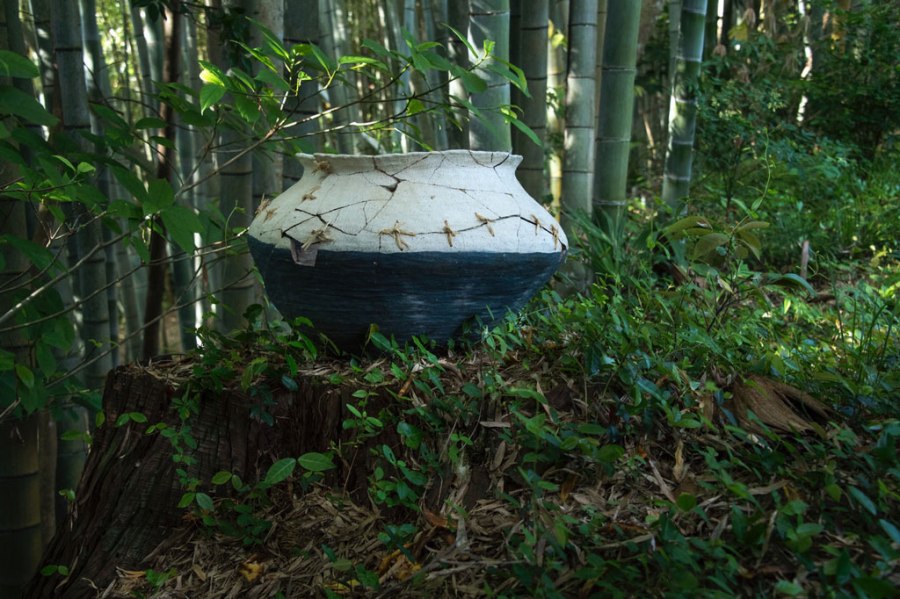
I think we all live the philosophy to some extent, whether through gardening, keeping things that we love even though they have been mended and might not look their best. I think I have unconsciously used it in my design ideas. I tend to make things out of what I have around the house rather than buying new materials for a project. Designs are created organically around the materials.
Sources
https://www.bbc.com/travel/article/20181021-japans-unusual-way-to-view-the-world
https://www.blumandpoe.com/artists/kazunori_hamana
Wabi-sabi: For Artists, Designers, Poets, & Philosophers by Leonard Koren
 laineyrainjournals.com